A full look at Cargohold
Every screen, with real data in it — not mockups. This is what you get from day one.
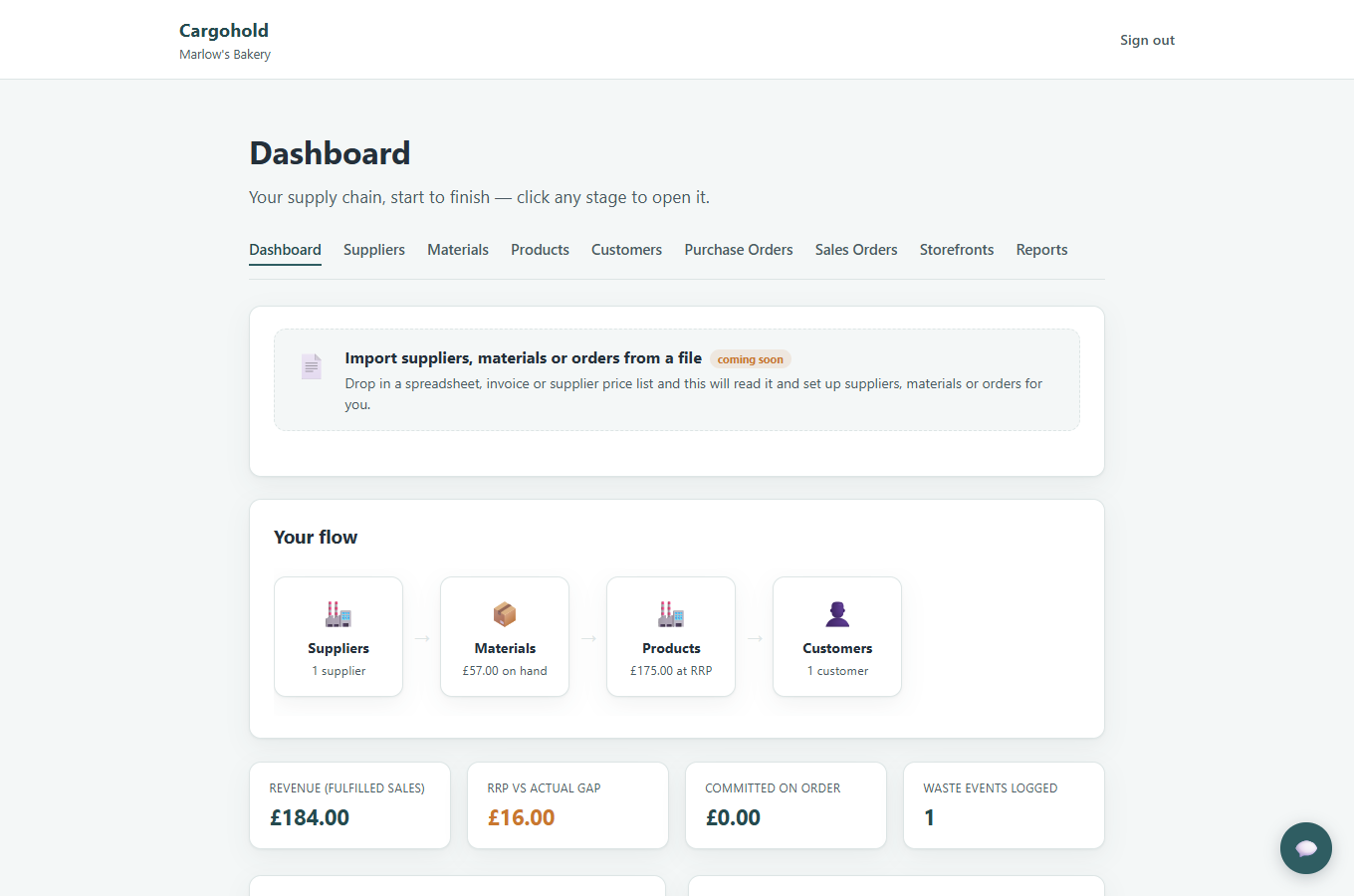
Your whole supply chain, one dashboard
A clickable flow diagram — Suppliers → Materials → Products → Customers — takes you straight to whichever stage you need, with the arrows showing open orders in transit between them.
- Materials on hand, finished goods at RRP, committed spend on order
- Revenue vs. what it would've been at RRP
- Low-stock and waste flagged automatically
Materials, priced and tracked
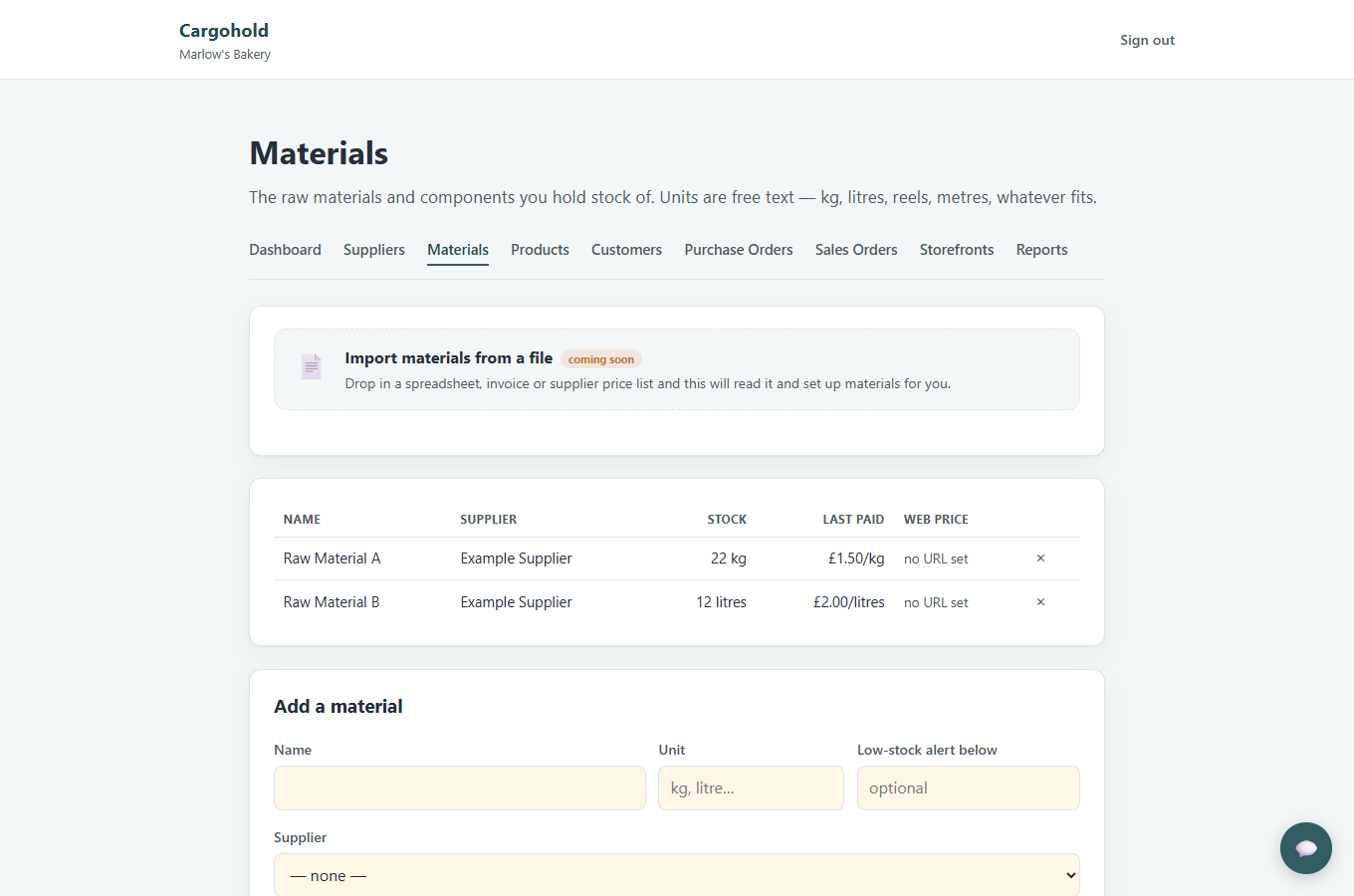
Every raw material carries its own unit — kg, litres, reels, whatever actually fits — with a supplier attached and a low-stock threshold you set. Link the exact product page you order it from and check its price with one click.
- Free-text units, not a fixed category list
- Last price paid, tracked automatically from purchase orders
- Optional web price-check against the supplier's own page, with change alerts
Import from the marketplaces you already sell on
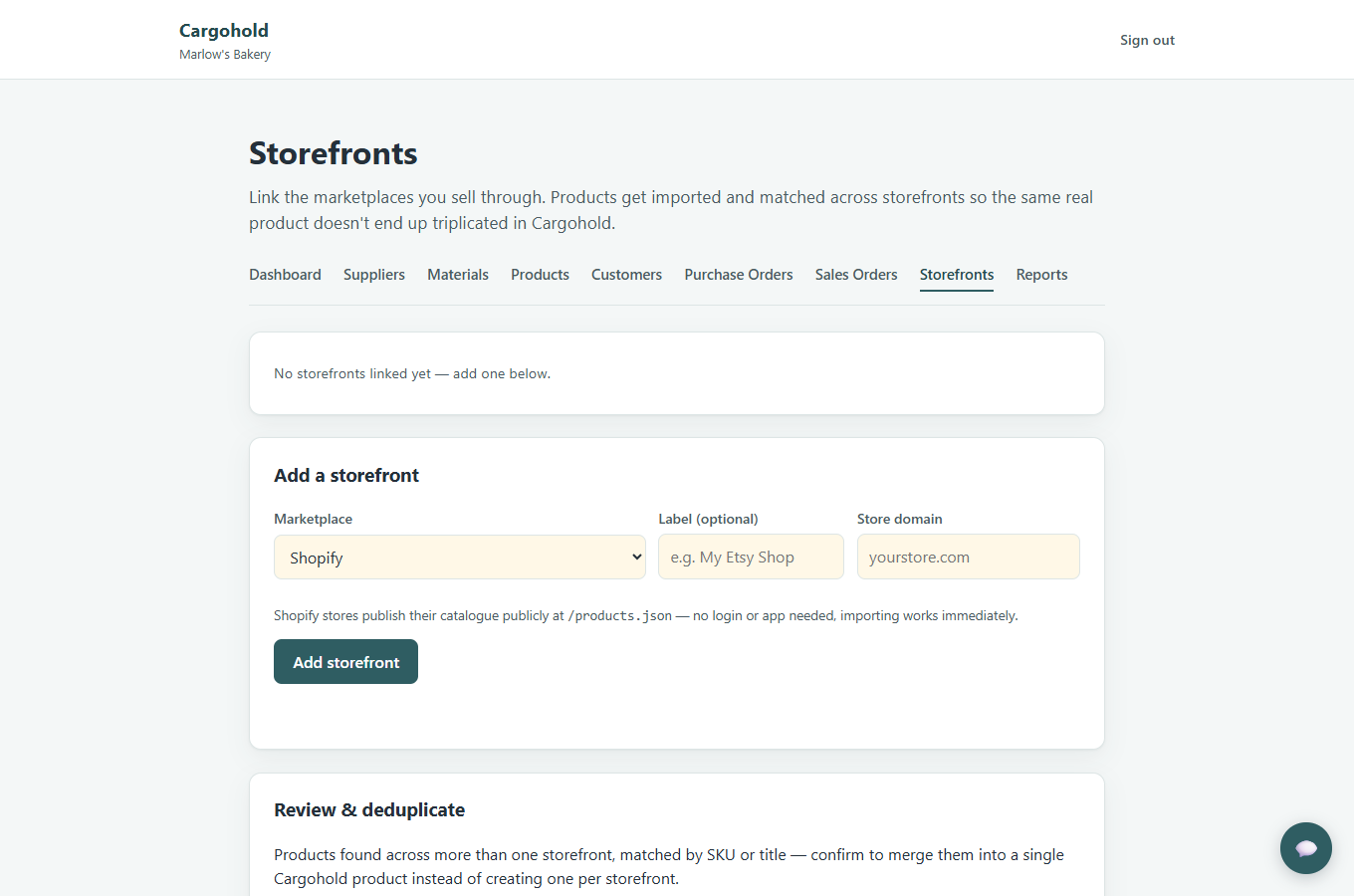
Link a Shopify store and its whole catalogue imports in one click — Shopify publishes it publicly, no account linking needed. Sell on more than one storefront? Matching listings get grouped for you to confirm as a single product, not triplicated.
- Shopify works today; Etsy and eBay are queued (they need their own developer app)
- Matched by SKU first, then title similarity — always shown for your confirmation
- Nothing merges without you saying yes
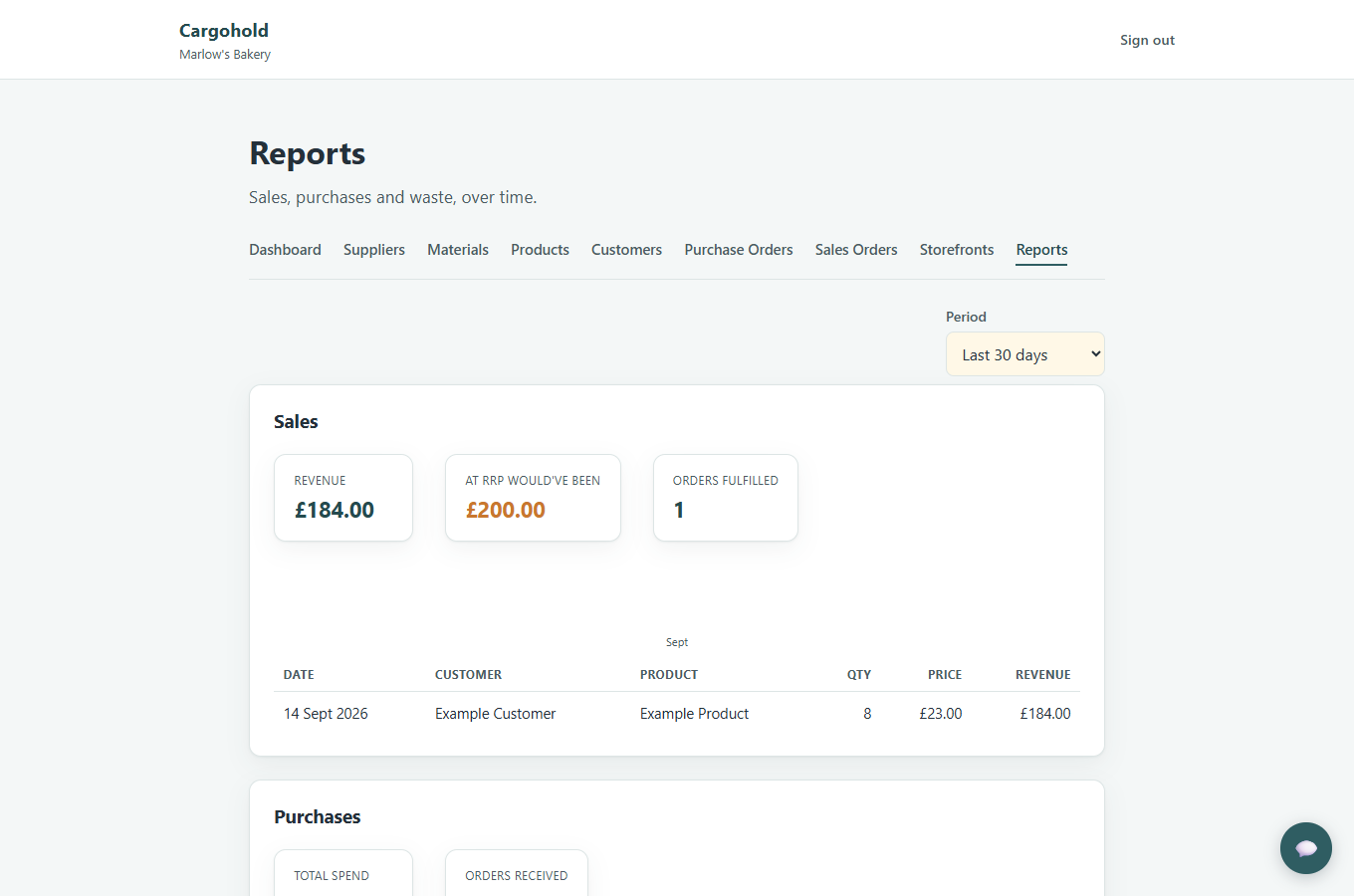
Sales, purchases and waste — one place, easy to read
A period filter, a month-by-month chart, and the full line-by-line table for each. See what you actually made against what you'd have made at RRP, what you spent on materials, and what waste is costing you.
- 7/30/90 days or all time
- Revenue vs. RRP gap, so discounting is visible, not hidden
- Waste valued at last known price — an estimate, labelled as one
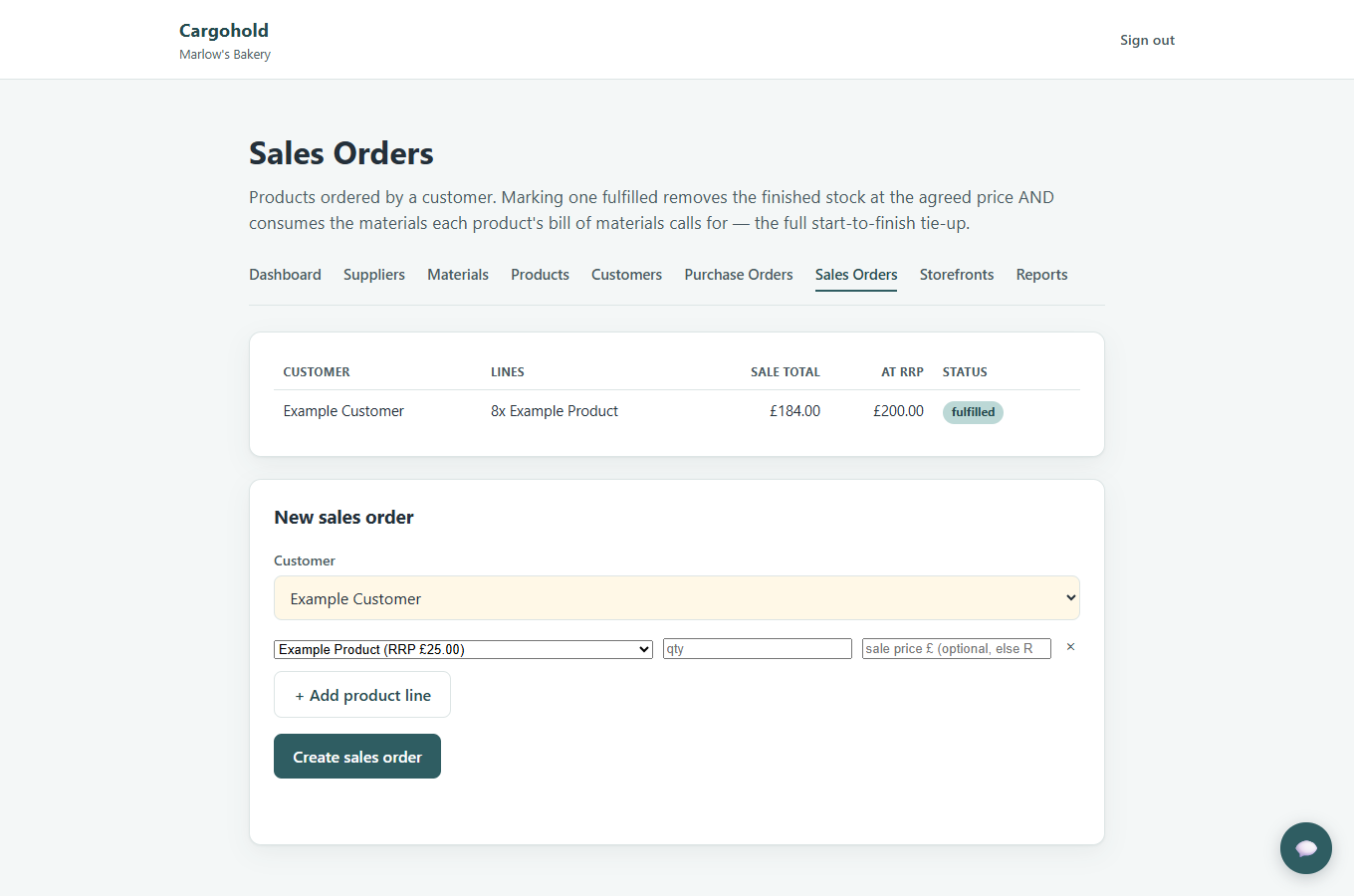
Purchase orders and sales orders that actually tie together
Set up a product's bill of materials once — how much of each material one unit needs. Receive a purchase order and the stock lands with the price you paid. Fulfil a sales order and it removes the finished stock and automatically consumes the right materials, at the right quantities, through that bill of materials.
- Placing an order doesn't move anything — receiving or fulfilling does
- RRP vs. the actual price you sold at, tracked per order line
- No bill of materials yet? The product still tracks fine, it just won't auto-consume materials on a sale